
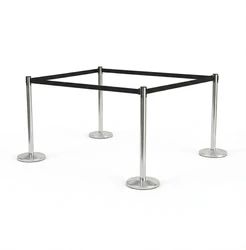
Retractable Barriers
Retractable belt barriers — also sold as belt stanchions, queue barrier posts, queue poles or crowd control bollards — for the lines that form at a counter, a till or a gate. The belt lives in a cassette inside the post: pull it across to the next post, and it winds itself back in when you are done.
Two ranges sit under this one. The standard posts carry a longer belt, which covers more ground with fewer posts and suits closing off an area or a display. The premium posts carry a shorter belt and are built a grade up — a thicker tube and more ballast in the same footprint — which holds a tighter line for a queue people move through all day. Each product page gives the exact belt length.
Black or silver posts, black or red belts, as single posts or in sets. Two made-to-order options sit alongside them: a clear post you fill yourself, and a belt printed with your own logo.
Wholesale and retail · Standard and premium ranges · Indoor use · Scroll down for the full range
- Product
- Qty in Cart
- Quantity
- Price
- Subtotal
-


Custom Logo Retractable Belt Barrier Bollard - Printed Belt Stanchion
TLT Retail Display
$60.00Made to order, and the price shown is a reference only — not the final price. What you pay depends on the quantity, the print method and how quickly you need them, so every order is quoted. Send us...$60.00 -
CUSTOM BUILD


Custom Retractable Belt Queue Barrier - Clear PVC Fillable Post
TLT Retail Display
$98.00Made to order, and the price shown is a reference only — not the final price. What you pay depends on the quantity, the belt you choose and how quickly you need them, so every order is quoted...$98.00 -
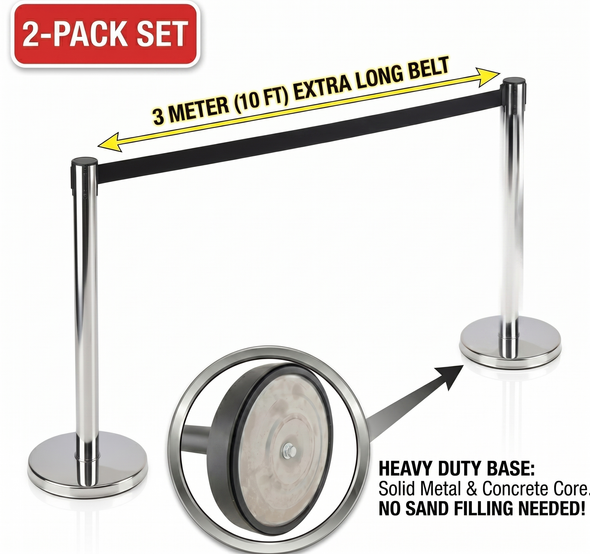

Queue Barrier Stanchion - Silver Post, Black 3m Retractable Belt Set of 2
TLT Retail Display
$92.80This is the silver post with a black belt, sold as a set of two. Also in black post with a black belt,$92.80 -
Premium
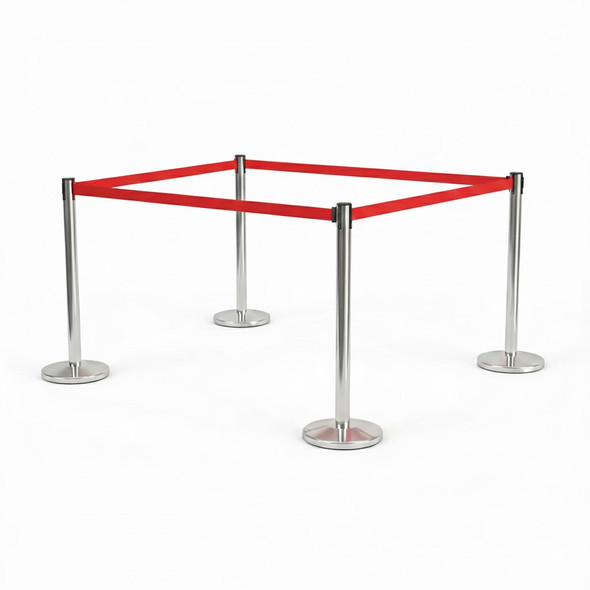
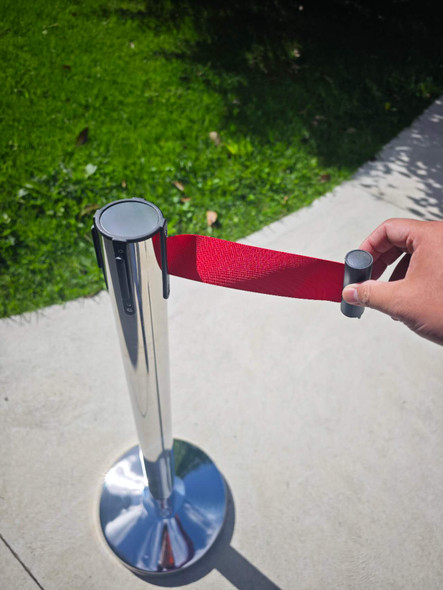
Premium Retractable Belt Queue Barriers Set of 4 - Silver Post, Red Belt
TLT Retail Display
$220.40This is the silver post with a red belt, a set of 4. Also in black post with a black belt,$220.40 -
Premium


Premium Retractable Belt Queue Barriers Set of 4 - Silver Post, Black Belt
TLT Retail Display
$220.40This is the silver post with a black belt, a set of 4. Also in black post with a black belt,$220.40 -
Premium

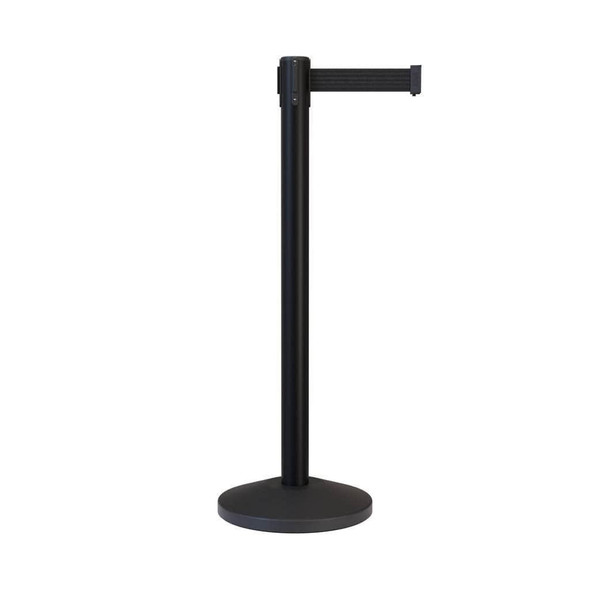
Premium Retractable Belt Queue Barriers Set of 4 - Black Post, Black Belt
TLT Retail Display
$220.40This is the black post with a black belt, a set of 4. Also in silver post with a black belt,$220.40 -
Premium
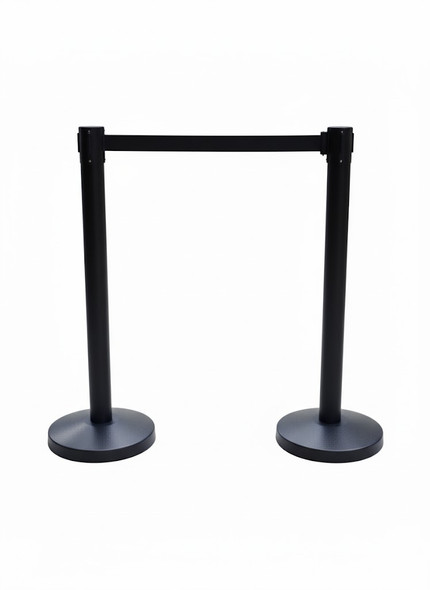

Premium Retractable Belt Queue Barriers Set of 2 - Black Post, Black Belt
TLT Retail Display
$116.00This is the black post with a black belt, a set of 2. Also in silver post with a black belt,$116.00 -
Premium
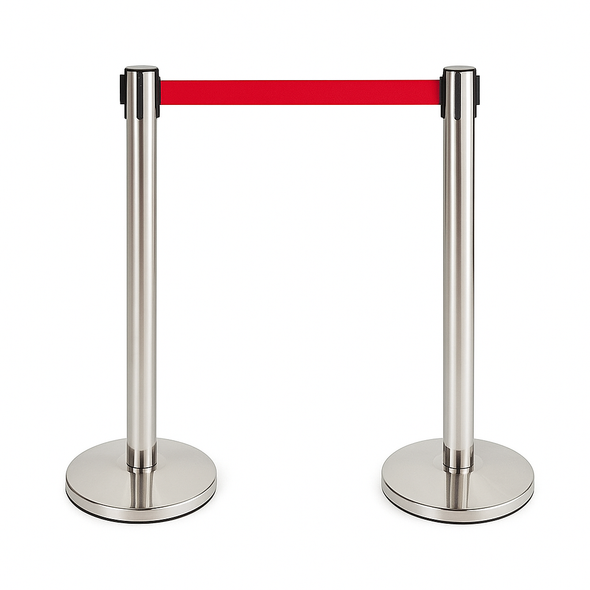
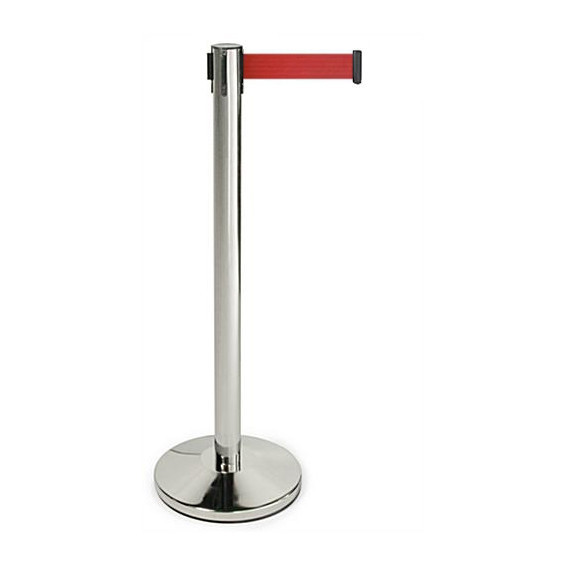
Premium Retractable Belt Queue Barriers Set of 2 - Silver Post, Red Belt
TLT Retail Display
$116.00This is the silver post with a red belt, a set of 2. Also in black post with a black belt,$116.00 -
Premium


Premium Retractable Belt Queue Barriers Set of 2 - Silver Post, Black Belt
TLT Retail Display
$116.00This is the silver post with a black belt, a set of 2. Also in black post with a black belt,$116.00 -
On SalePremium


Premium Retractable Belt Queue Barrier - Silver Post, Black Belt
TLT Retail Display
Now: $58.00Was: $62.00This is the silver post with a black belt, a single post. Also in black post with a black belt,Now: $58.00Was: $62.00 -
On SalePremium
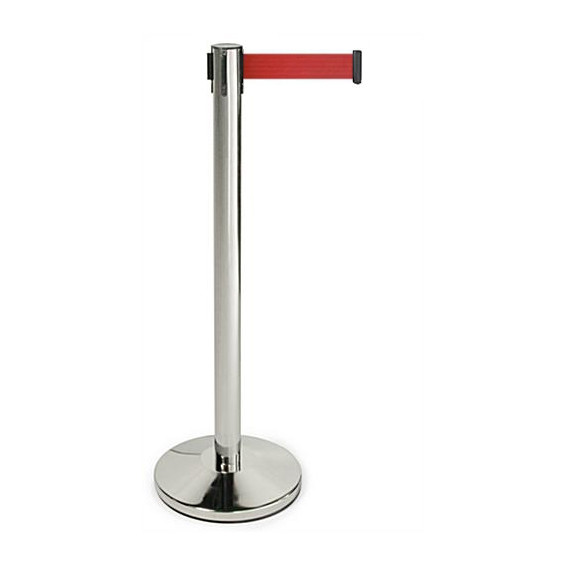

Premium Retractable Belt Queue Barrier - Silver Post, Red Belt
TLT Retail Display
Now: $58.00Was: $62.00This is the silver post with a red belt, a single post. Also in black post with a black belt,Now: $58.00Was: $62.00 -
On SalePremium


Premium Retractable Belt Queue Barrier - Black Post, Black Belt
TLT Retail Display
Now: $58.00Was: $62.00This is the black post with a black belt, a single post. Also in silver post with a black belt,Now: $58.00Was: $62.00 -


Queue Barrier Stanchion with A4 Portrait Sign Holder - Black
TLT Retail Display
$93.60This is the A4 portrait option of the same set. The A3 or A4, portrait or landscape page is the same product with the choice left to you;$93.60 -


Queue Barrier Stanchion with A4 Landscape Sign Holder - Black
TLT Retail Display
$93.60This is the A4 landscape option of the same set. The A3 or A4, portrait or landscape page is the same product with the choice left to you$93.60 -


Queue Barrier Stanchion with Sign Holder - A3 or A4, Double Sided, Black
TLT Retail Display
$93.60 - $102.60Pick the sign size and the orientation from the drop-down above - A3 or A4, portrait or landscape. A crowd control stanchion with a sign holder on top, sold as one set. The post marks out the queue...$93.60 - $102.60 -
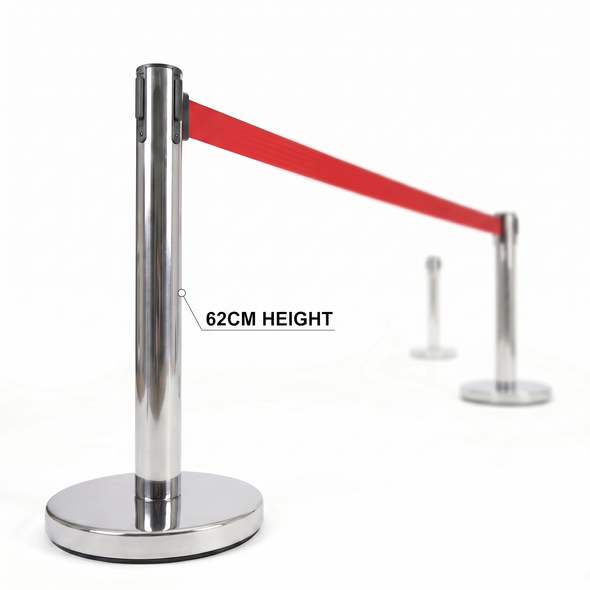

Short Queue Barrier Stanchion 62cm - Silver Post, Red 3m Retractable Belt
TLT Retail Display
$48.60This is the silver post with a red belt, 62 cm tall, sold as a single post. Also in black post with a black belt; or in the$48.60 -
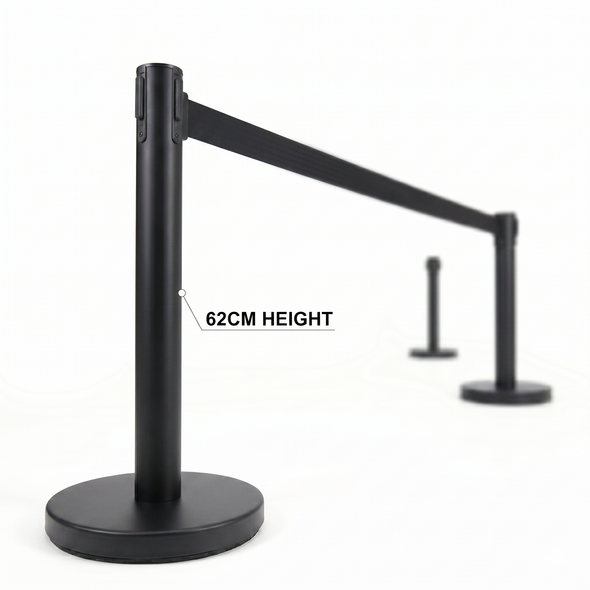
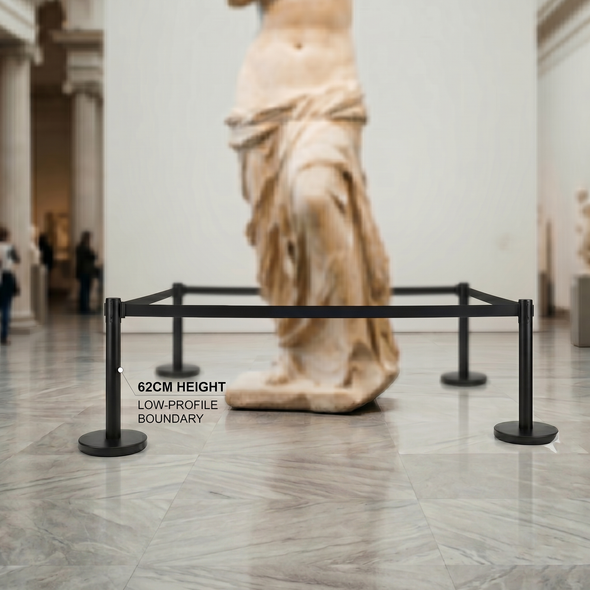
Short Queue Barrier Stanchion 62cm - Black Post, Black 3m Retractable Belt
TLT Retail Display
$48.60This is the black post with a black belt, 62 cm tall, sold as a single post. Also in silver post with a red belt; or in the$48.60 -

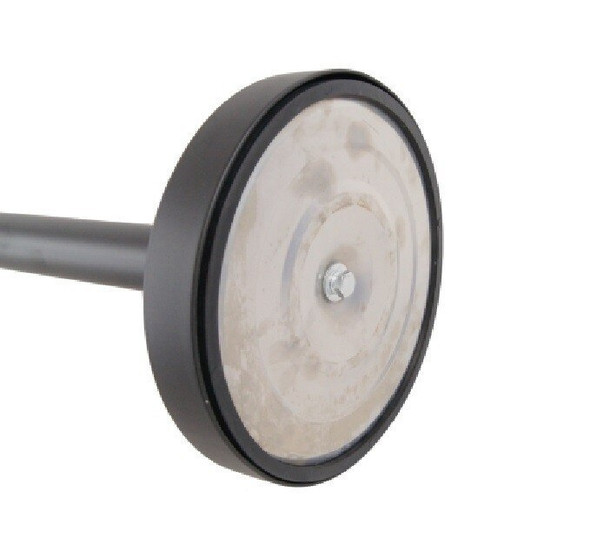
Queue Barrier Stanchion - Black Post, Black 3m Retractable Belt Set of 2
TLT Retail Display
$92.80This is the black post with a black belt, sold as a set of two. Also in silver post with a red belt,$92.80 -
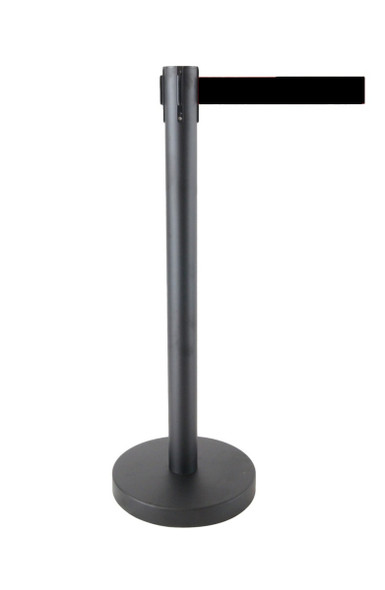
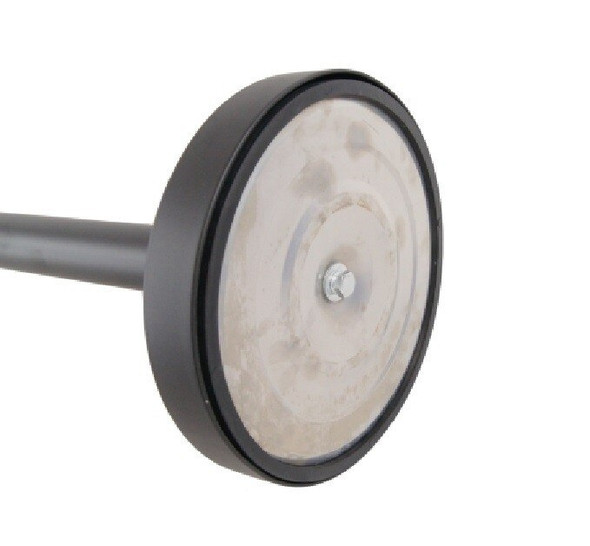
Queue Barrier Stanchion - Black Post, Black 3m Retractable Belt
TLT Retail Display
$48.60This is the black post with a black belt, sold as a single post. Also in black post with a red belt,$48.60 -
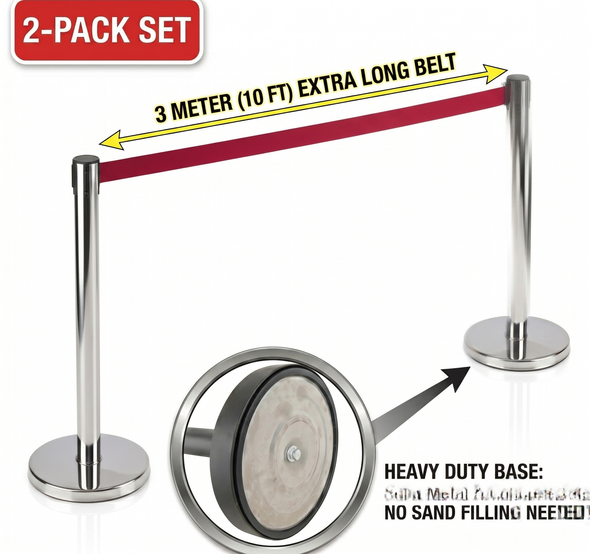
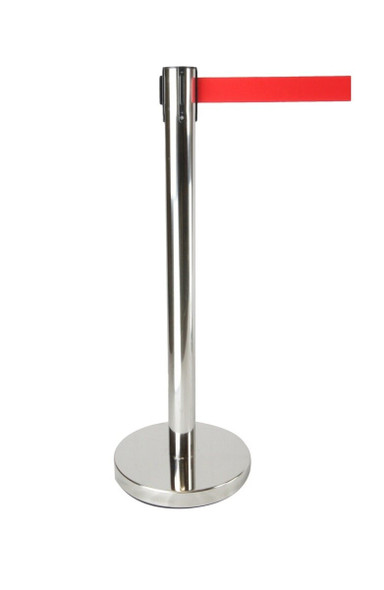
Queue Barrier Stanchion - Silver Post, Red 3m Retractable Belt Set of 2
TLT Retail Display
$92.80This is the silver post with a red belt, sold as a set of two. Also in black post with a black belt,$92.80 -


Queue Barrier Stanchion - Silver Post, Red 3m Retractable Belt
TLT Retail Display
$48.60This is the silver post with a red belt, sold as a single post. Also in black post with a black belt,$48.60 -


Queue Barrier Stanchion - Silver Post, Black 3m Retractable Belt
TLT Retail Display
$48.60This is the silver post with a black belt, sold as a single post. Also in black post with a black belt,$48.60 -
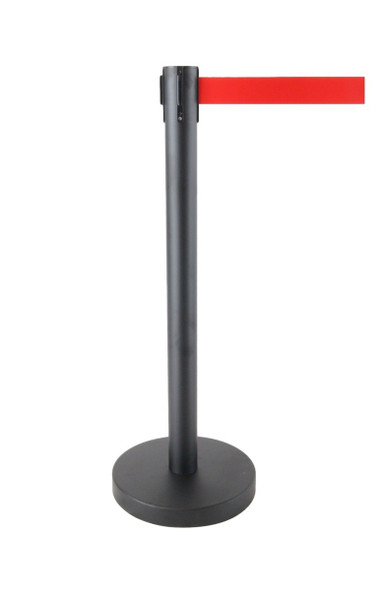

Queue Barrier Stanchion - Black Post, Red 3m Retractable Belt
TLT Retail Display
$48.60This is the black post with a red belt, sold as a single post. Also in black post with a black belt,$48.60
Standard or premium — it is not just a price difference
The two ranges differ in three ways that matter, and only one of them is obvious from a photograph.
Belt length. The standard range carries the longer belt, so each post covers more ground and a run costs fewer posts. The premium range carries a shorter belt, which sounds like less for your money until you are managing an actual queue — a shorter span holds the line tighter and gives people less room to drift or cut across.
How the belt comes back. This is the difference nobody mentions and everybody notices. The standard cassette retracts on its own, quickly. The premium cassette is a soft-retract design: it takes the belt back under control rather than snapping it home. On a barrier that is extended and released dozens of times a day, that is the difference between a mechanism that lasts and one that is being punished every time it is used.
How much metal is in it. The premium post has a thicker tube and more ballast in the same footprint. It stays where it is put when people lean on the belt all day; the standard post is specified for lighter duty.
The short version: covering an area that people should not walk into, or a line that forms occasionally, take the standard range. A queue that forms every day at a counter, a till or a gate, take the premium range — it is the one that will still be working in three years.
Belt length is not the same as post spacing
A belt is quoted at its full extended length, and the usable span between posts is shorter than that, because part of the belt stays in the cassette and the end has to reach the receiver with a little slack. The product page gives both figures where they differ.
Plan the run on the usable span, not the headline number. A barrier set up at the absolute limit of its belt is under constant tension, which drags on the posts, pulls the end clip out of the receiver when somebody knocks it, and wears the cassette faster. Set the posts slightly closer and the whole run behaves.
Looking after the mechanism
A belt barrier is the only item in this category with a moving part, and it fails in one predictable way.
- Never let the belt snap back. Unclip it and walk it back to the post, or let a soft-retract cassette do the work. A belt released from full extension hits the end of its travel hard, and doing that repeatedly is what breaks the recoil mechanism.
- Do not let the belt twist. A twisted belt winds back onto the spool unevenly and eventually jams. If it has twisted, pull it fully out, straighten it, and feed it back.
- Keep the slot clear. Dust and grit drawn into the cassette with the belt are what make retraction sound rough.
- If the belt is worn, replace the cassette rather than the post. The cassette unscrews, and replacement cassettes are stocked — it is also how you change belt colour without buying new barriers.
Joining a run, and finishing one
The belt pulls out of one post and clips into a receiver on the next. For a corner or a junction, the receiver on the side of a post takes a belt arriving from a different direction, so one post can serve two runs. To end a run against a wall, a wall-mounted receiver takes the clip so you are not standing a post where there is no room for one — or use a wall mounted barrier and remove the post from that end entirely.
When the run comes down, let every belt retract before moving anything. A post carried with the belt still extended means the belt is dragging on the floor, and that is how a belt gets cut.
Setting up and packing down
These arrive flat and assemble in about a minute each — a single screw holds the post to its base — and they pack back the same way if the posts are being stored between events. Two posts to a carton, so budget vehicle space accordingly for a large set.
If the barriers will be transported regularly rather than left standing, keep the cartons. They are the easiest way to move posts without the bases chipping each other, and a chipped base is the part customers see.
Retractable belt barrier FAQ
Will your belt clip onto posts I already own?
Most standard stanchions use the same style of receiver, so it usually does, but we cannot guarantee it against every brand. If you are matching an existing set, buy one post and test it before ordering the rest.
Can I put a sign on top?
Yes. Sign holders slide onto the head of the post and turn it into a sign stand — see the accessories range. In a queue this is the most-read sign in the building, because people standing still read whatever is in front of them.
What happens if someone walks through the belt?
The clip releases from the receiver and the belt retracts. That is the intended behaviour — the belt is a visual boundary, not a restraint, and a barrier that refused to release would do more damage than it prevented. Clip it back in and carry on.
Can these be used outdoors?
They are indoor equipment. The belt catches wind like a sail would, the base is not designed to be weighted further, and the cassette is not sealed against water or dust.
Can I get a belt printed with our logo?
Yes, made to order. There is also a version with a clear post you can fill yourself. Both are quoted rather than priced, because the quantity, the print method and the lead time all change the number — tell us what you need.
Belt or rope?
Belt where the barrier is extended and retracted as part of the day's work, and where the run has to change shape. Rope where the barrier stands in one place looking formal and is rarely moved. If the barriers will be packed down daily, belt wins on time alone — there is nothing to unclip and carry.
Where does this sit in the wider range?
Under queue barriers and crowd control, alongside the rope systems, the wall mounted units and the spares and sign holders that keep a run in service.