
Retail & Showrooms
Fitting out a shop or showroom
Follow the path a shopper takes, from the footpath to the till. Each stop is one decision and the type of product that settles it.
A shop gets four chances to say something: the window, the aisle, the shelf edge where the decision happens, and the till. Most shops do the first and the last and skip the two in between.
The shopfront
Stop someone who was walking past
The window works around the clock; the footpath sign works while you are open. Together they are the only things talking to people who had no intention of coming in, and they are the cheapest advertising a shop owns.
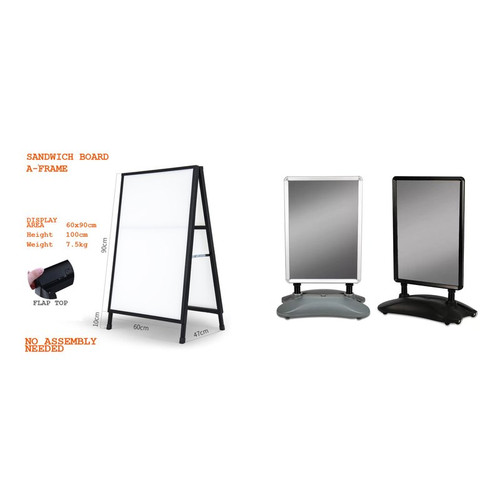
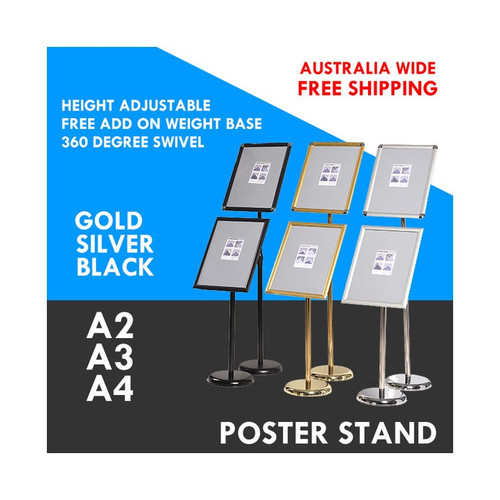
You needA window holder for the glass, a pavement sign for trading hours, and a snap frame stand just inside the door for the campaign poster.

The entry and the aisles
Carry a message across the floor
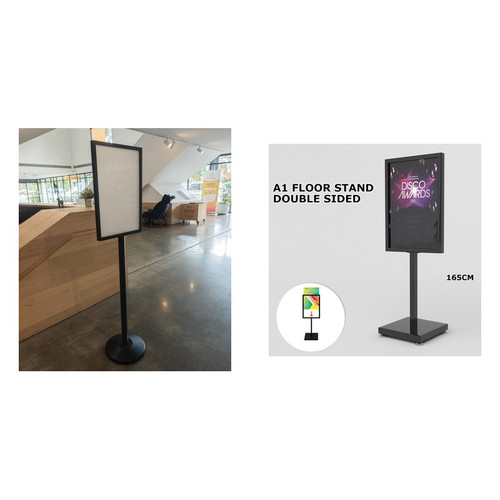
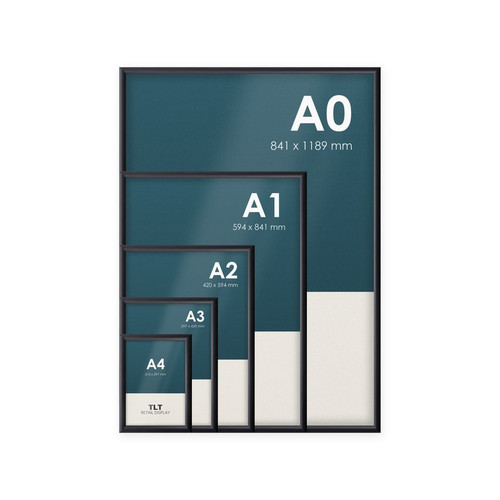
A sign at the entrance sets the tone; a sign at the end of an aisle turns a browser into somebody walking towards something. Both get read from several metres back, which means a floor stand or a frame on the wall rather than anything sitting on a shelf.
You needWeighted floor stands that move when the floor plan does, adjustable poles for aisle ends, and wall frames for department and category headers.
At the shelf and the till
Answer the question at the point of decision
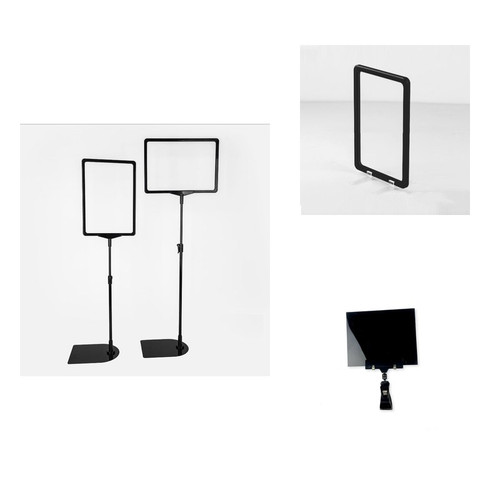
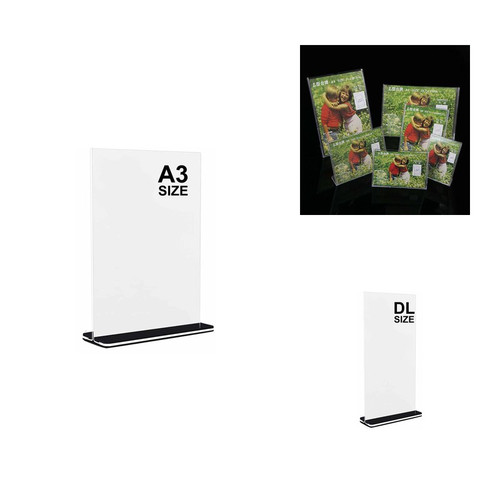
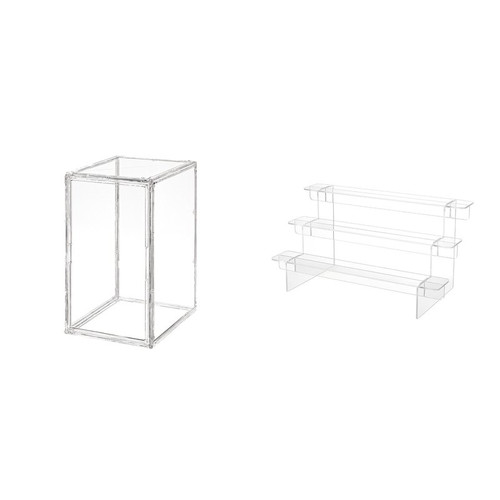
This is where price gets read and the decision gets made. A sign here talks to one person standing in front of the thing it describes, so it can be small and say less, as long as it answers what is actually in their head: how much, what is it, why this one.
You needShelf and clip-on holders at the fixture, counter holders at the till, and risers and cases to get the product seen and keep it intact.
Wayfinding, policies and fitting rooms
Answer the questions staff get asked all day
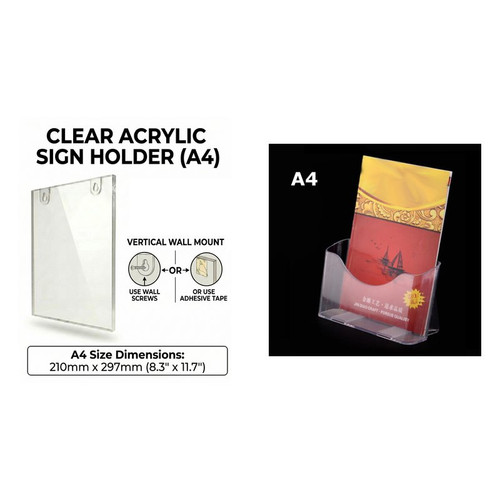
Where are the fitting rooms, where are the toilets, what is your returns policy, do you price match, is this the queue. Every one of those asked out loud is a staff member not selling. Put them on the wall once and they answer themselves.
You needWall sign holders for policies and directions, and snap frames for anything larger or seasonal.
Queues and showroom displays
Control the line, protect the stock
A queue that forms where you did not plan it blocks the aisle it formed in. And on a showroom floor a rope says “look, do not lean” far more politely than a staff member has to.
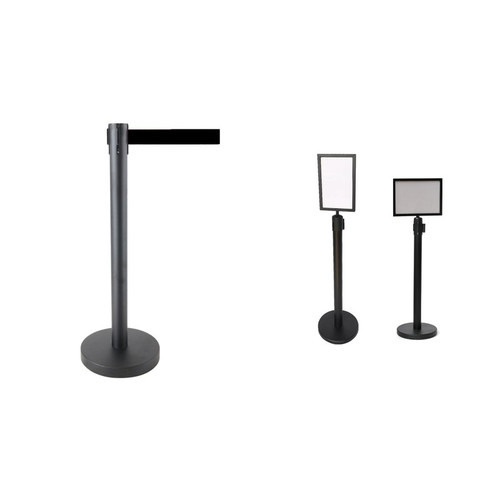
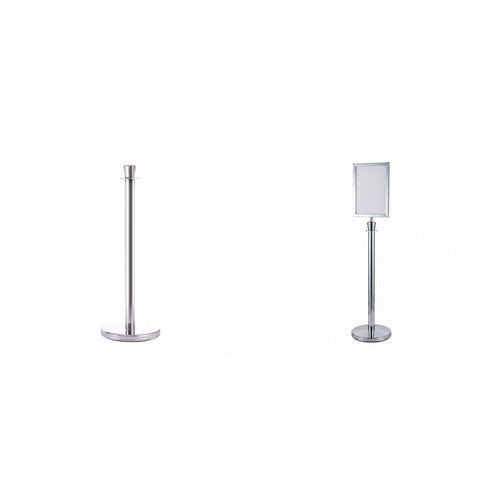
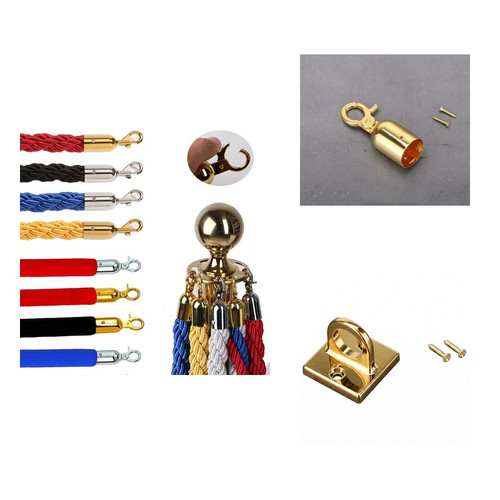
You needBelt barriers for a moving queue, rope barriers around anything on display, and spares so a damaged post does not cost you a whole set.
Buying for more than one site?
Most of what we ship goes to organisations fitting out several rooms or several locations at once. Send the quantities, the sizes and the delivery postcodes and we will price it as one order, freight included, so the figure you take to approval is the figure you pay. Orders are dispatched within one business day.
Other spaces: Cafes, restaurants & hotels · Offices, schools & buildings · Exhibition stands · All industries
There are no products listed under this category.