
Floor Standing Menu & Catalogue Stands
Floor standing display stands — menu stands, catalogue stands, lecterns, poster stands and pavement signs. Everything here stands on its own: no wall to drill, no counter to give up, pick it up and put it somewhere else when the room changes.
Which one you want comes down to how close the reader is standing. Something read at arm’s length wants an angled top. Something read from across the room wants to be upright and large. Something read from the footpath has to survive being outside.
Four ranges sit under this one, and the page below sorts out which is which.
Wholesale and retail · Indoor and outdoor · Scroll down for how to choose
- A-Frame Signs & Pavement Boards
- Menu Stands & Information Lecterns
- POS & Retail Promotion Displays
- Poster Stands & Floor Sign Holders
- Product
- Qty in Cart
- Quantity
- Price
- Subtotal
-
On Sale


A4 Sign Floor Stand (Heavy Duty Base) Frame Poster Stand Display Stands Silver
TLT Retail Display
Now: $89.00Was: $128.00This is the A4 size in silver. The same stand comes in A3 and A2Now: $89.00Was: $128.00 -


A1 Double Sided Poster Stand - Heavy Duty Floor Sign Holder, Black
TLT Retail Display
$258.00This is the A1 size. The same stand comes in A2,$258.00 -
On SaleOwner’s ChoiceQuality Pick
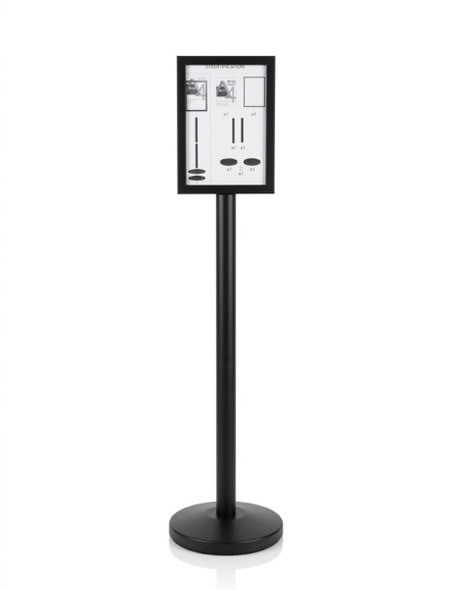
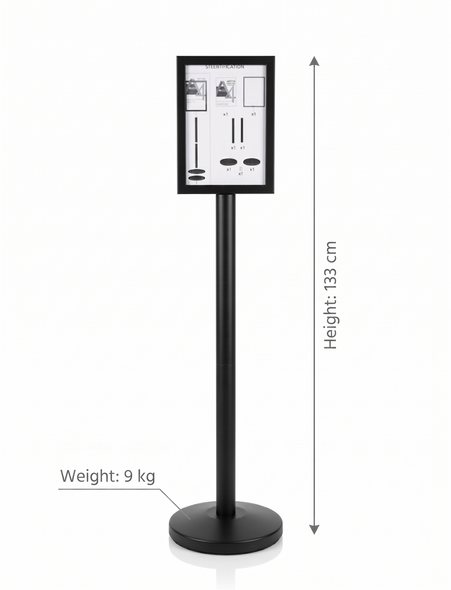
A4 Double Sided Poster Stand - Heavy Duty Floor Sign Holder, Black
TLT Retail Display
Now: $108.00Was: $148.00This is the A4 size. The same stand comes in A1,Now: $108.00Was: $148.00 -


A3 Gold AB Floor Poster Stand - Adjustable Tilt Pedestal Sign Holder
TLT Retail Display
$68.00This is the A3 stand in gold. The same stand also comes in black and$68.00 -


A3 Black AB Floor Poster Stand - Adjustable Tilt Pedestal Sign Holder
TLT Retail Display
$68.00This is the A3 stand in black. The same stand also comes in gold and$68.00 -
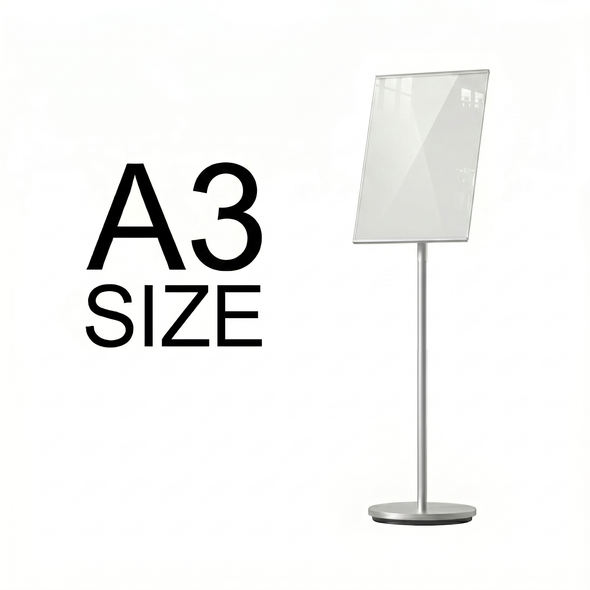
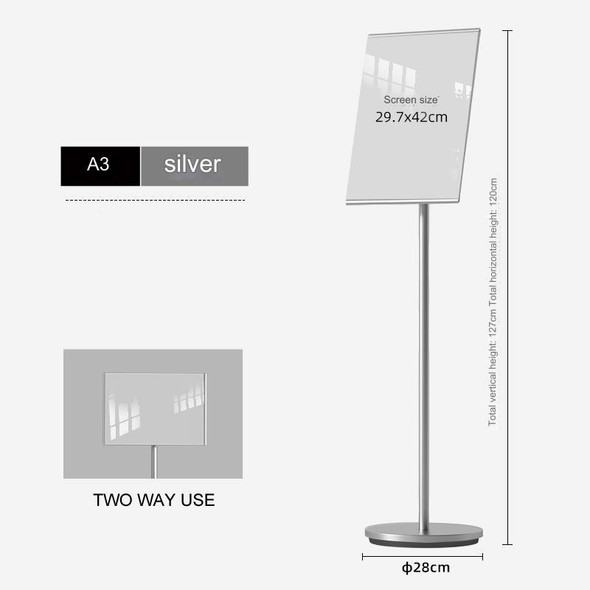
A3 Silver AB Floor Poster Stand - Adjustable Tilt Pedestal Sign Holder
TLT Retail Display
$68.00This is the A3 stand in silver. The same stand also comes in black and$68.00 -


A4 Silver AB Floor Poster Stand - Adjustable Tilt Pedestal Sign Holder
TLT Retail Display
$58.00This is the A4 stand in silver. The same stand also comes in black and$58.00 -

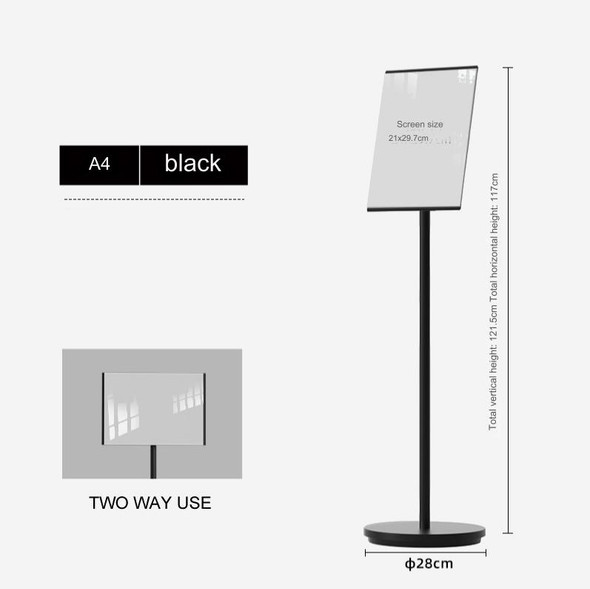
A4 Black AB Floor Poster Stand - Adjustable Tilt Pedestal Sign Holder
TLT Retail Display
$58.00This is the A4 stand in black. The same stand also comes in gold and$58.00 -

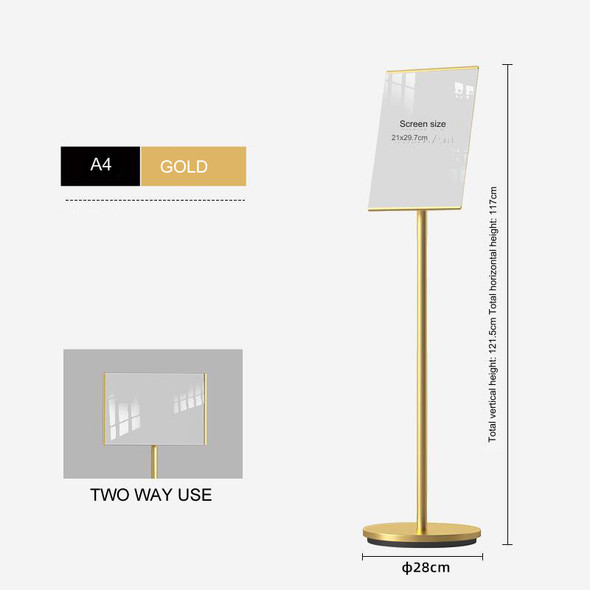
A4 Gold AB Floor Poster Stand - Adjustable Tilt Pedestal Sign Holder
TLT Retail Display
$58.00This is the A4 stand in gold. The same stand also comes in black and$58.00 -
On Sale
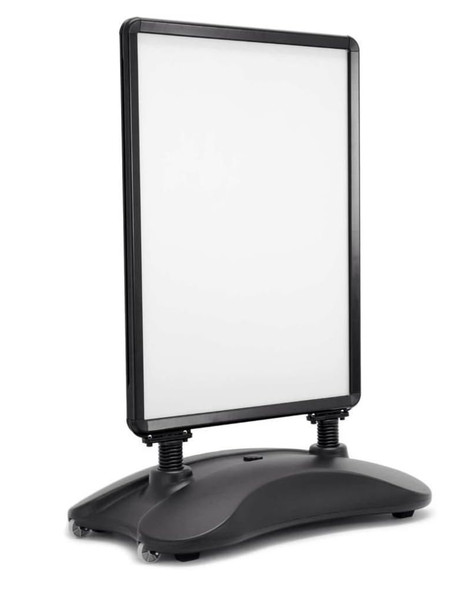

A1 Pavement Sign with Water Base - Double Sided, Black, on Wheels
TLT Retail Display
Now: $199.00Was: $268.00A double sided pavement sign for the footpath outside the door. The aluminium frame sits on two springs above a hollow base you fill with water or sand, so a gust pushes the sign over and it rocks...Now: $199.00Was: $268.00 -
On SaleOwner’s ChoiceQuality Pick


A3 Double Sided Poster Stand - Heavy Duty Floor Sign Holder, Black
TLT Retail Display
Now: $128.00Was: $198.00This is the A3 size. The same stand comes in A1,Now: $128.00Was: $198.00 -
On Sale

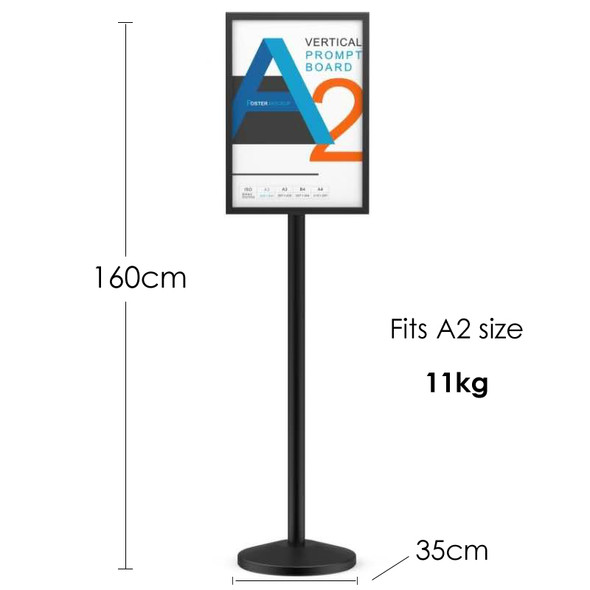
A2 Double Sided Poster Stand - Heavy Duty Floor Sign Holder, Black
TLT Retail Display
Now: $158.00Was: $225.00This is the A2 size. The same stand comes in A1,Now: $158.00Was: $225.00 -
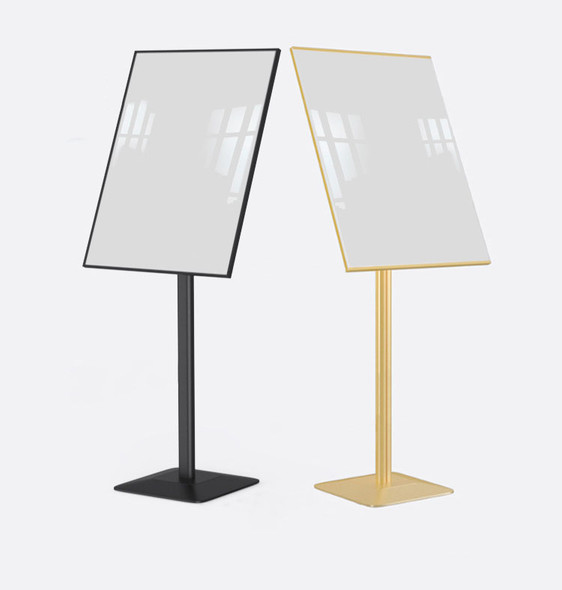

A2 Poster Stand - Premium Pedestal with Acrylic Front, Black or Gold
TLT Retail Display
$118.00 - $138.00Pick black or gold from the drop-down above. An A2 poster stand on a square weighted base, 131 cm tall. It goes in a foyer, a showroom, a restaurant entrance or a hotel lobby - somewhere a single...$118.00 - $138.00 -
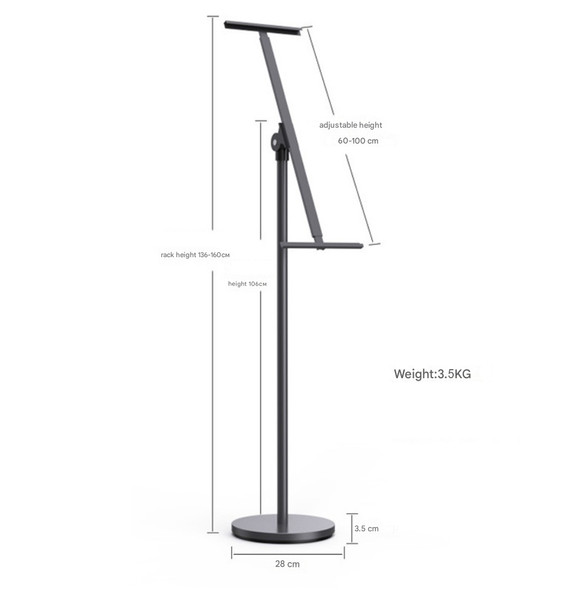
Premium Tilt POP Stand - Corflute Sign Holder, Black Gold or Silver
TLT Retail Display
$58.00Pick black, gold or silver from the drop-down above. A single pole stand with a tilting arm for a corflute or cardboard sign, on a round weighted base. It goes at the end of an aisle, beside a...$58.00 -


Re-Writable Clip-On Sign Holder - Black Acrylic, Swivel Clip
TLT Retail Display
$7.35This is the clip-on sign holder - a write-on board on a spring clip. For printed signs in a frame instead, see the A4 table top sign holder.$7.35 -
A3 POS Sign Holder Frame - PVC Slide-In, Blue
TLT Retail Display
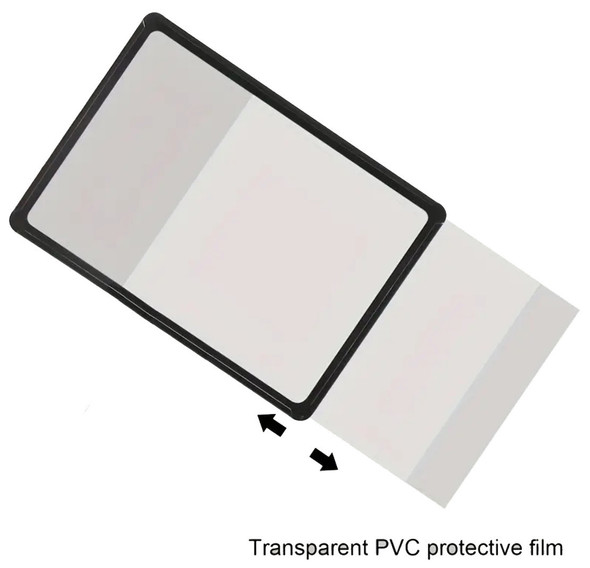
$8.55This is the frame on its own, in blue. Also in black, red; or in$8.55 -

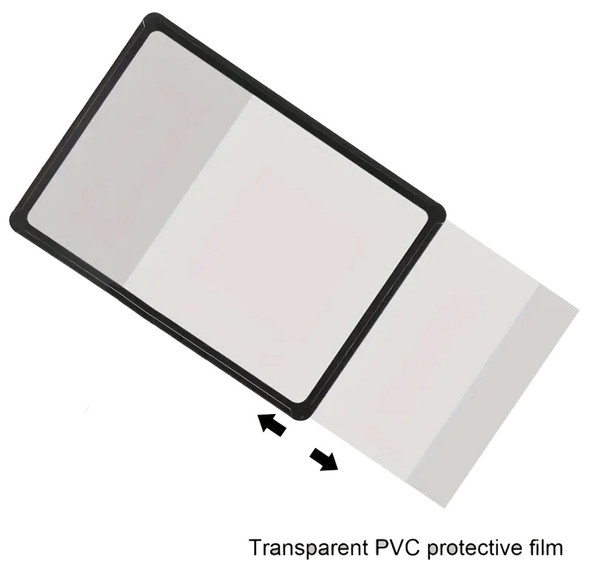
A3 POS Sign Holder Frame - PVC Slide-In, Red
TLT Retail Display
$8.55This is the frame on its own, in red. Also in black, blue; or in$8.55 -
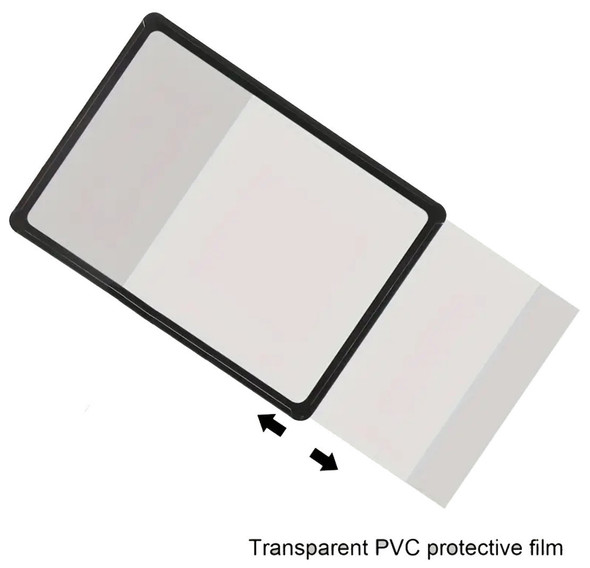
A5 POS Sign Holder Frame - PVC Slide-In, Blue
TLT Retail Display
$4.80This is the frame on its own, in blue. Also in black, red; or in$4.80 -


A5 POS Sign Holder Frame - PVC Slide-In, Red
TLT Retail Display
$4.80This is the frame on its own, in red. Also in black, blue; or in$4.80 -

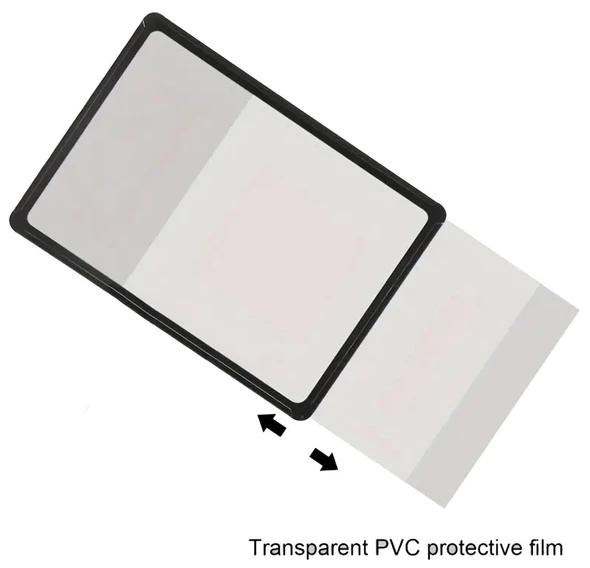
A4 POS Sign Holder Frame - PVC Slide-In, Blue
TLT Retail Display
$6.10This is the frame on its own, in blue. Also in black, red; or in$6.10 -
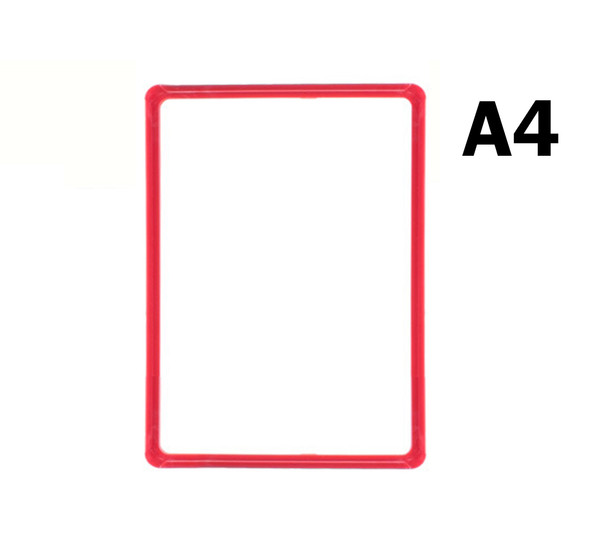

A4 POS Sign Holder Frame - PVC Slide-In, Red
TLT Retail Display
$6.10This is the frame on its own, in red. Also in black, blue; or in$6.10 -

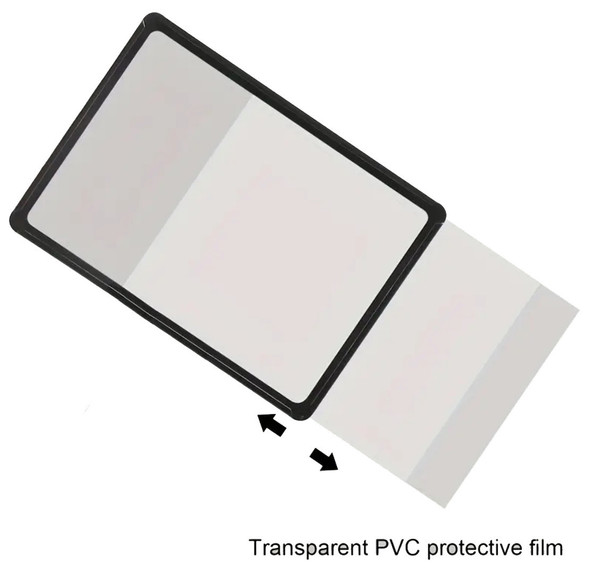
A4 POS Sign Holder Frame - PVC Slide-In, Black
TLT Retail Display
$6.10This is the frame on its own, in black. Also in red, blue; or in$6.10 -


A5 POS Sign Holder Frame - PVC Slide-In, Black
TLT Retail Display
$4.80This is the frame on its own, in black. Also in red, blue; or in$4.80 -


A3 POS Sign Holder Frame - PVC Slide-In, Black
TLT Retail Display
$8.55This is the frame on its own, in black. Also in red, blue; or in$8.55 -
FREE SHIPPING
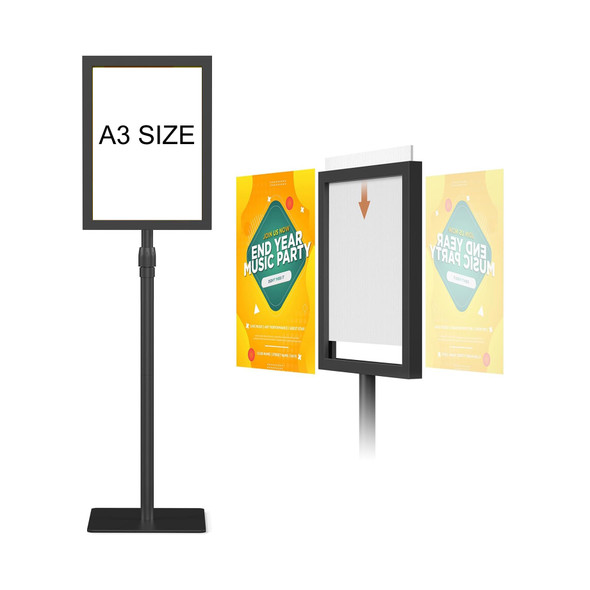

A3 Double Sided Poster Stand - Adjustable Height Floor Stand, Black
TLT Retail Display
$55.00This is the A3 size. The same stand comes in A4. A3 double sided poster stand on a telescopic pole, so you can set it to th$55.00 -
FREE SHIPPING
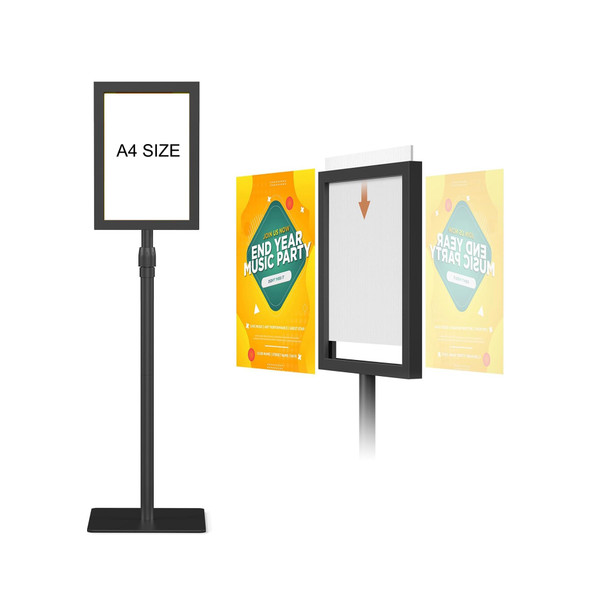
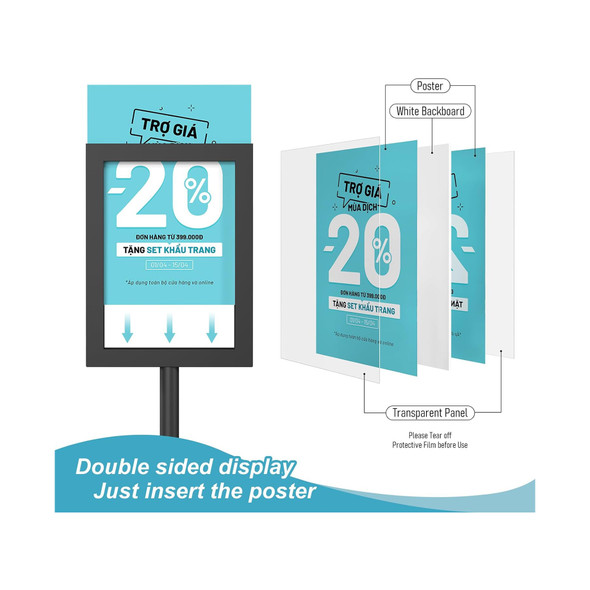
A4 Double Sided Poster Stand - Adjustable Height Floor Stand, Black
TLT Retail Display
$45.00This is the A4 size. The same stand comes in A3. A4 double sided poster stand on a telescopic pole, so you can set it to th$45.00 -
On Sale

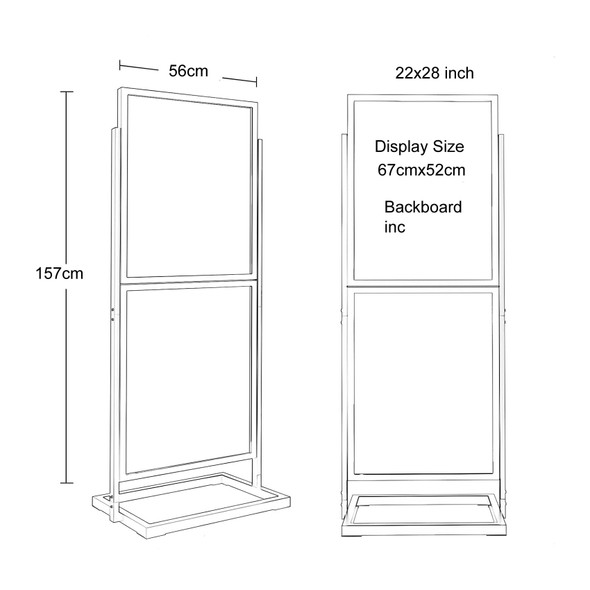
A2 Poster Stand - 2 Tier Double Sided Pedestal, Black, 157 cm
TLT Retail Display
Now: $99.00Was: $128.00A two tier pedestal stand for a foyer, an entrance or a shop floor: 157 cm tall, 56 cm wide, with two display panels stacked one above the other. Both tiers are double sided, so the stand carries...Now: $99.00Was: $128.00Qty in Cart: 0Quantity:Price:Now: $99.00Was: $128.00Subtotal: -
On Sale
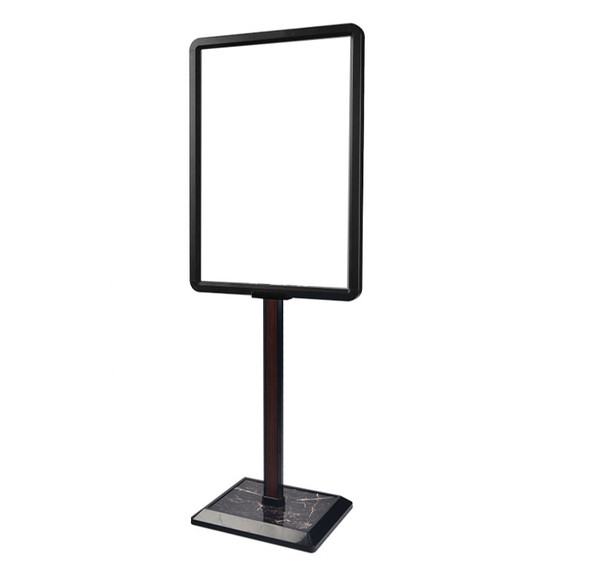
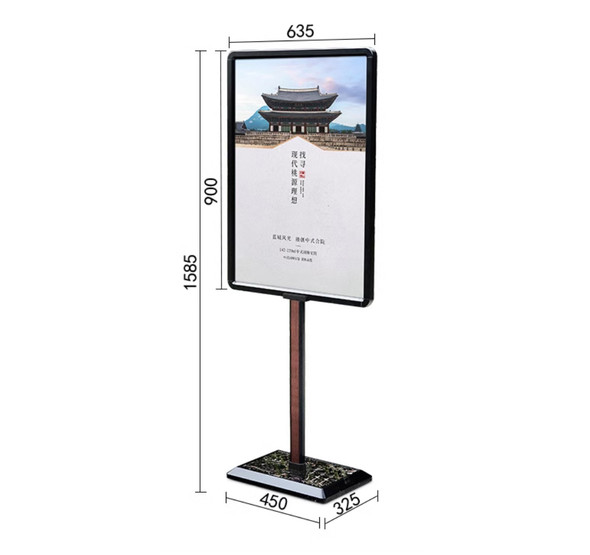
Pedestal Poster Stand - Double Sided, 590 x 885 mm Insert, Black
TLT Retail Display
Now: $79.00Was: $168.00A double sided pedestal stand for a foyer, a reception or a showroom floor. It stands 158.5 cm on a 450 x 325 mm base, with a black frame, a woodgrain-finish pole and a marble-look panel set into the...Now: $79.00Was: $168.00 -
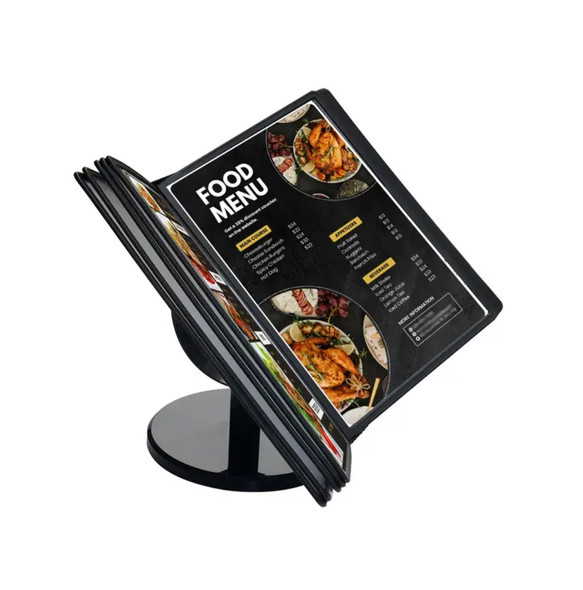
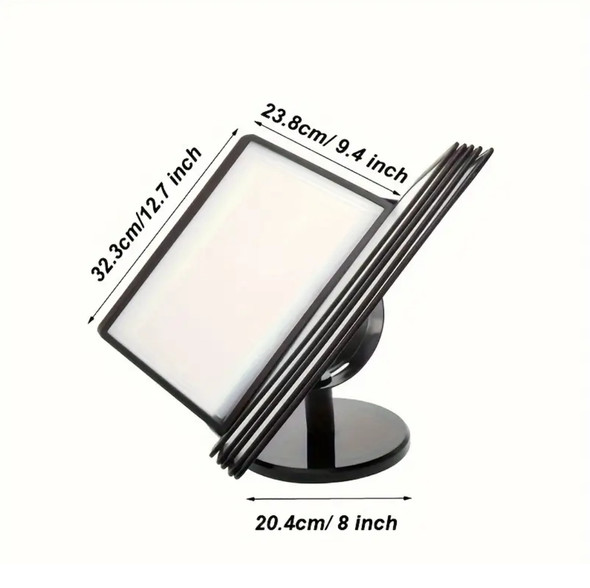
Rotating Desktop Menu Holder - A4 Flip Stand, 20 Pages
TLT Retail Display
$128.00A table top menu holder that turns on its base. The panels flip like the pages of a book, so a customer can read the menu, the wine list and the specials sheet without picking anything up.Ten...$128.00 -
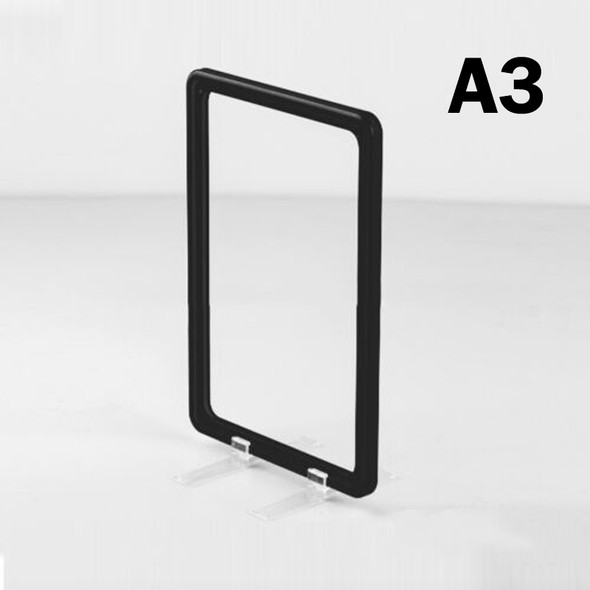

A3 POS Table Top Sign Holder - Counter Display Frame
TLT Retail Display
$12.50This is the table top version - frame plus two feet. Also as a floor stand on an adjustable pole, or as the$12.50 -


A5 POS Table Top Sign Holder - Counter Display Frame
TLT Retail Display
$7.75This is the table top version - frame plus two feet. Also as a floor stand on an adjustable pole, or as the$7.75 -


A4 POS Table Top Sign Holder - Counter Display Frame
TLT Retail Display
$9.95This is the table top version - frame plus two feet. Also as a floor stand on an adjustable pole, or as the$9.95 -


A3 POS Floor Sign Holder - Height Adjustable Stand
TLT Retail Display
$18.50 - $19.50This is the floor version - frame, adjustable pole and weighted base. Also as a table top stand, or as the$18.50 - $19.50 -


A4 POS Floor Sign Holder - Height Adjustable Stand
TLT Retail Display
$16.50 - $17.50This is the floor version - frame, adjustable pole and weighted base. Also as a table top stand, or as the$16.50 - $17.50 -

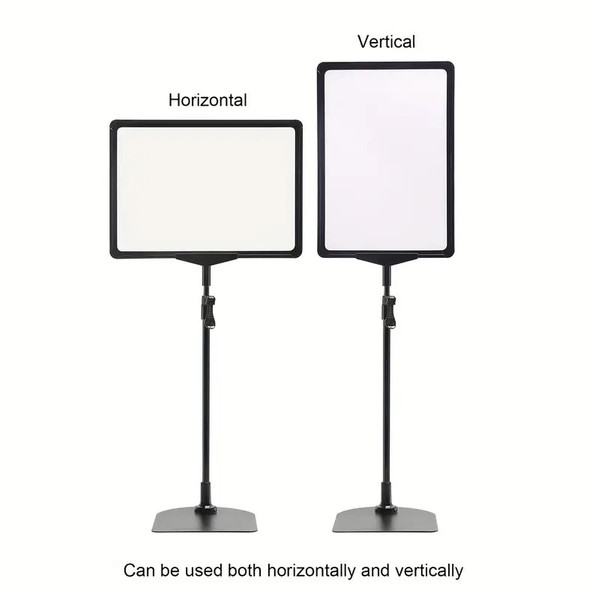
A5 POS Floor Sign Holder - Height Adjustable Stand
TLT Retail Display
$14.50 - $15.50This is the floor version - frame, adjustable pole and weighted base. Also as a table top stand, or as the$14.50 - $15.50 -
On Sale

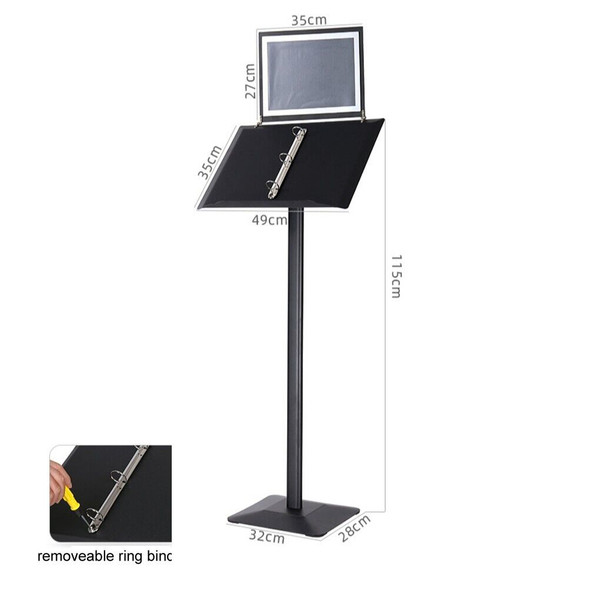
Black A4 Menu Stand with Sign Holder - Ring Binder Lectern
TLT Retail Display
Now: $128.00Was: $168.00A floor standing menu stand in black with a second sign on top of it - about 151 cm overall, on a weighted 32 x 28 cm base. It is the one for a doorway that needs to say one thing loudly and another...Now: $128.00Was: $168.00 -
On Sale

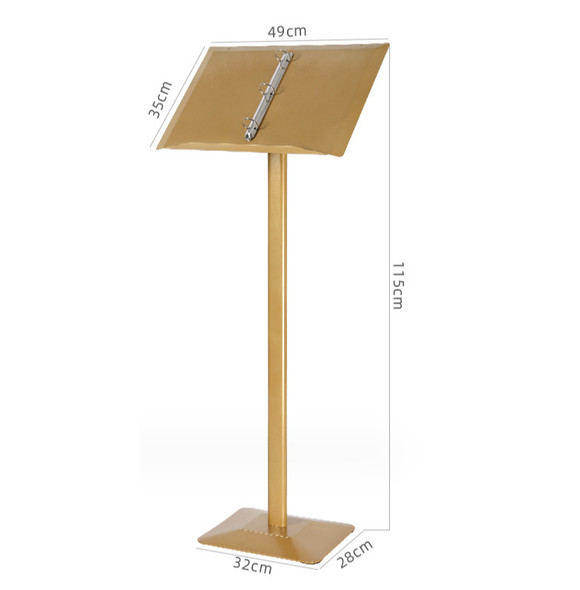
Gold A4 Menu Stand - Floor Standing Ring Binder Lectern
TLT Retail Display
Now: $98.00Was: $128.00A floor standing menu stand in gold, 130 cm to the top of the panel on a weighted 32 x 28 cm base. It goes at the door of a restaurant, at the end of a reception desk or beside a lift - wherever...Now: $98.00Was: $128.00 -
On Sale


Black A4 Menu Stand - Floor Standing Ring Binder Lectern
TLT Retail Display
Now: $98.00Was: $128.00A floor standing menu stand in black, 130 cm to the top of the panel on a weighted 32 x 28 cm base. It goes at the door of a restaurant, at the end of a reception desk or beside a lift - wherever...Now: $98.00Was: $128.00 -
On Sale

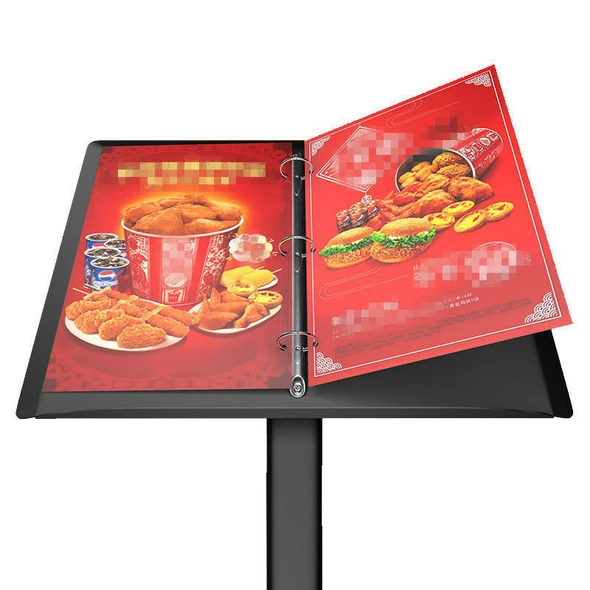
Silver A4 Menu Stand - Floor Standing Ring Binder Lectern
TLT Retail Display
Now: $98.00Was: $128.00A floor standing menu stand in silver, 130 cm to the top of the panel on a weighted 32 x 28 cm base. It goes at the door of a restaurant, at the end of a reception desk or beside a lift - wherever...Now: $98.00Was: $128.00 -


Acrylic Poster Stand - A3 or A4 Pedestal, Black or Silver
TLT Retail Display
$89.00 - $128.00Pick the size and the finish from the drop-down above - A3 or A4, black or silver. A clear acrylic poster stand on a weighted base. The panel is two sheets of acrylic held apart at the corners, and...$89.00 - $128.00
Four ranges, and how to tell them apart
Everything on this page stands on the floor. What separates the four ranges is how far away the person reading it is standing, and that single question gets you to the right one faster than any spec sheet.
Reading it at arm’s length → menu stands and lecterns
A menu, a wine list, a price list, a room directory, a sign-in sheet. The reader walks right up and looks down at it, so the top is angled towards them and sits at about the height you would hold a book. An upright poster would have them craning. This is the range for restaurant entrances, hotel lobbies, reception desks and wayfinding.
Reading it from across the room → poster stands and floor sign holders
A promotion, an opening-hours notice, a price point, a safety message. Nobody is going to walk over to read it, so it stands upright, at eye level, and the print is large. These live in aisles, foyers, entrances and anywhere you want a message to carry across a space.
Reading it from the footpath → A-frames and pavement signs
The sign is outside, the reader is walking past, and the wind is the enemy. These fold flat, sit low and wide, or take a base you fill on the day. They go out in the morning and come in at night. A stand not built for outdoor use will not stay upright in the first strong wind.
Standing beside the product → POS and promotion displays
A price, an offer, a “new in” flash sitting right next to the thing it refers to. Smaller, lighter and designed to be moved whenever the floor plan changes, rather than to hold a position for a year.
Angled or upright?
This catches people out, so it is worth saying plainly. An angled top — a lectern — is for reading. It puts the page at the angle a book would be at, which is comfortable at close range and almost useless from more than a couple of paces, because you are looking at the page edge-on.
An upright face is for seeing. It reads cleanly from across a room, and it is uncomfortable to read closely because you have to stand back from it.
If people will stop and read — a menu, a list, a form — go angled. If people will glance while walking — a promotion, a direction, a warning — go upright. Some stands tilt so you can have it either way; the product page says which.
What is actually going in it?
Worth checking before you buy, because it decides the fitting rather than the stand.
- Paper print. A standard A-size sheet from a print shop or an office printer. Fits almost everything here.
- Printed board. Corflute or cardboard — rigid, thicker than paper, used for outdoor and promotional signs. Needs a clamp or a channel made for board thickness, not a paper frame.
- A menu in a cover. Thicker again, and often a non-standard size. Measure it before you buy a stand with a fixed frame.
- Something you change constantly. Then the loading mechanism matters more than anything else — look for a frame that opens rather than a channel you have to slide the print into.
Floor standing display stand FAQ
What is the difference between a lectern and a poster stand?
The angle, and therefore the reading distance. A lectern angles the page towards someone standing at it. A poster stand holds the print upright so it carries across a room. Same job — show a printed page — opposite ends of the room.
Which height should it be?
For anything read up close, around the height you would rest a book: comfortable to look down at without stooping. For anything read at distance, the print wants to be near standing eye level, so the top of the stand ends up higher. Several stands here adjust, which is the safe answer if the spot might change.
Can I use an indoor stand outside?
Not as a routine. Indoor bases are weighted for people brushing past, not for wind, and the finish and print are not made for weather. If it is going outside every day, buy something built for outside.
Do they come assembled?
Most arrive flat and go together in a few minutes with what is in the box. Where more than that is involved, it is noted on the product page.
Can I move it once it is up?
Indoor stands are made to be repositioned by one person — that is the point of a floor stand over something screwed to a wall. Outdoor stands with a filled base are not; empty them first, or pick one with wheels.
What if I want it on the wall or the counter instead?
Then you do not want a floor stand at all. For walls, the snap frames and poster displays and the wall mounted brochure holders. For brochures and magazines in volume, the brochure floor stands and magazine racks.
Can you supply the printing as well?
We supply the stands, not the printing. Any print shop can produce what goes in them — tell them the size the product page lists and ask them to keep text clear of the edges.
How is delivery charged?
Each product page shows how that item is sent; the larger stands travel by courier rather than post. A handful of regional and remote postcodes fall outside what the checkout can price — when that happens, send us the address and you will get a courier quote back before anything is paid, with no obligation to proceed.
Do you do bulk or trade pricing?
Price breaks show on the product pages that have them. For a multi-site rollout or a mix across the ranges, ask us for a quote — most of what we ship is sites fitting out several rooms at once rather than a single stand.